There’s a great dish that is served at Mae’s, a restaurant near our apartment and also served for lunch sometimes at Max’s preschool. It’s called pyttipanna and Max is a big fan.
Here’s the story, for those of you who are unfamiliar with it:
Often described as a hodgepodge of food, a pyttipanna is a classic dish of the Nordic countries of Sweden and Norway consisting of fried potatoes, meat, and caramelized onions. The dish can also be found under various other names. In Denmark, it is known as biksemad, while in Finland it is called pyttipannu. Sometimes the dish may be listed as pytt i panna or pytt y panna or simply abbreviated to pytt.
Ok, it’s not exactly classic Thai, but since it has expanded Max’s list of approved dishes from about 5 to about 6, we’re not arguing.
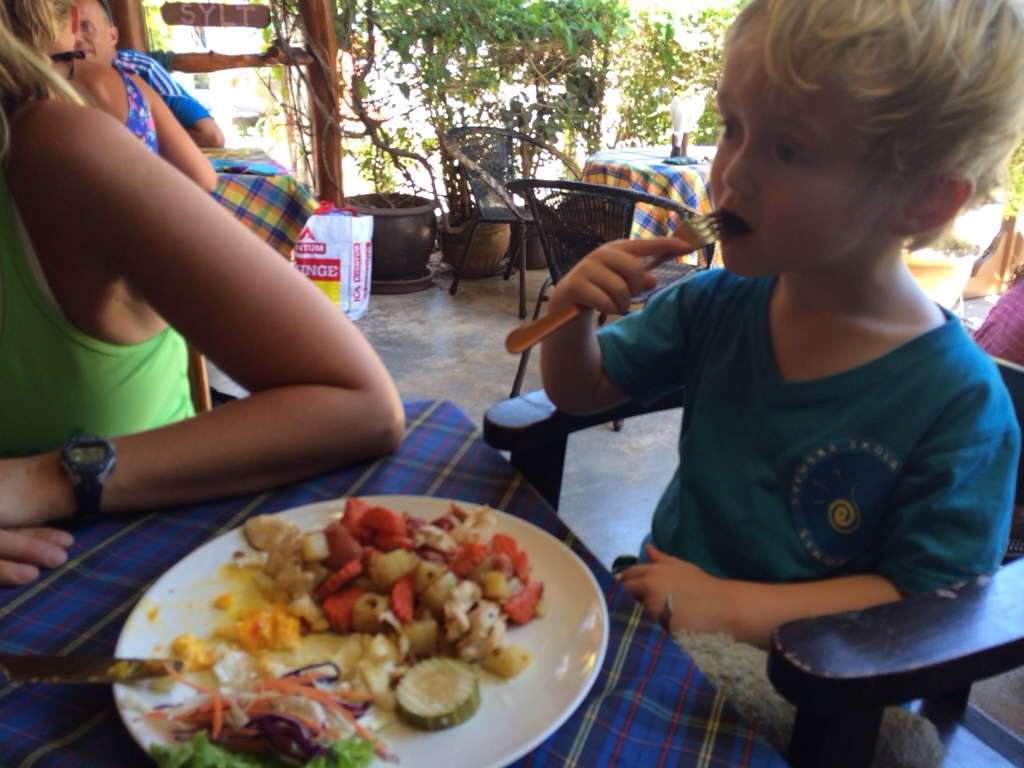
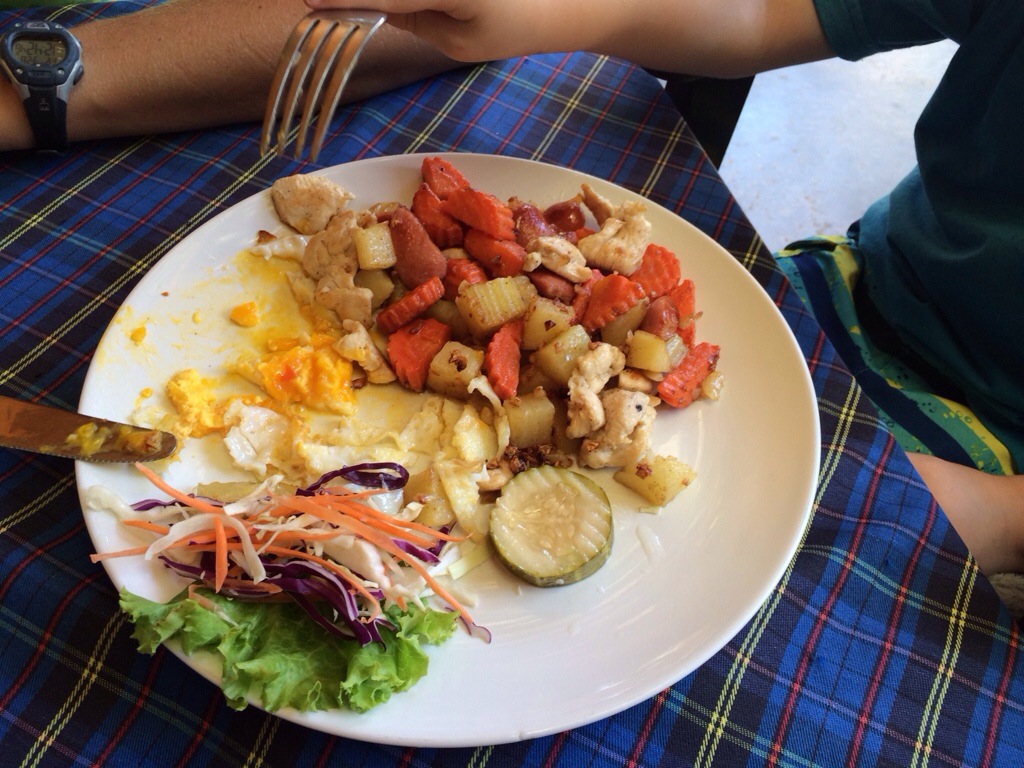
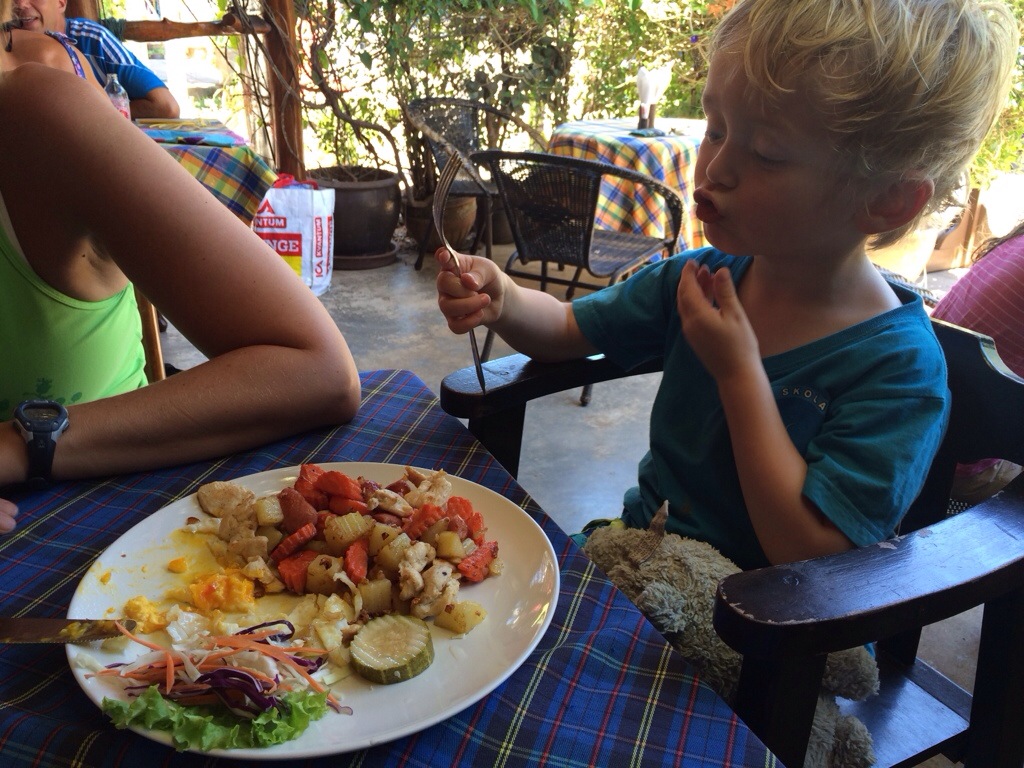
If you’re not Nordic and you’re thinking, “hey, I’ve seen that dish!” that’s because…
A pyttipanna has similarities to a number of other hearty dishes fried in the pan in other parts of the world. One example is corned beef hash, a dish found in the United States, which is a pan-fried mixture of onions and diced potatoes with corned beef. It has also been compared to bubble and squeak, a traditional English dish made of leftover vegetables such as potatoes and cabbage sauteed together in a pan.
Want to make your own?
Traditionally, a pyttipanna is made from the leftovers of other meals. Therefore, the type of meat added to the dish can vary based on what leftovers are in a household. A leftover pot roast, veal, or Christmas ham could be used, as can steak, pork, and bacon.
To make pyttipanna, the ingredients are generally fried in oil or butter in a skillet. Finely chopped onions are cooked until browned and then removed from the hot skillet and replaced with diced potatoes, which are also cooked until golden. These potatoes may be precooked, but raw potatoes might also be used. After removing the potatoes from the pan, leftover meat is sliced and tossed into the pan until the meat is warmed through. Then the potatoes and onions are stirred back into the meat mixture, and the dish is allowed to continue cooking until browned and crisped.
Instead of making the pyttipanna from leftovers, however, it is also becoming commonplace to make the dish out of fresh premium meats. If making from raw meat, the meat may need to cook first and will likely need to saute for a longer length of time to become tender. In addition to the basic ingredients, mixed herbs, a clove of garlic, or leftover vegetables are also included in some recipe variations.
The pyttipanna is usually served with a raw egg yolk on top. Alternatively, a fried egg may be used to top off the dish. In fact, a second frying pan is usually used as the pyttipanna is in the final moments of cooking to prepare a sunny-side up egg or some other fried variety. Pickled red beets, capers, and sliced pickles are also commonly served on the side.
Max goes for the potatoes, a few carrots, and the fried egg on top. Meats and other unidentifiables need not apply.
Smaklig måltid, bon appetit, and ขอให้เจริญอาหาร! (kŏr hâi jà-rern aa-hăan!)
 The Spigelblog
Hmm, would this work for a black box dinner event? Could be a new team sport!