I’ve been meaning to write this since we first arrived in Koh Lanta and were surrounded by countless Swedish families on long-term vacations. They were there for 3 months, 6 months, or more. Many were regulars, returning for a second or third multi-month stint. Some had just one kid but many had multiple. These weren’t rock stars or hedge fund managers who had cashed out. They were teachers, police officers, IT consultants, and other good, hard working folks. How did they all do it?
They had babies, that’s how.
Canada has generous parental leave policies compared to the US and several other countries. 50 weeks is a lot, or so I thought.
Swedes get 480 days. Yes, that’s 16 months per child. Same goes for adopted children. And most of that time can be split between the parents in any ratio, taken concurrently, or taken part-time and spaced out (eg. a mother could take 100% leave for 6 months, then dad takes 50% for 6 months, then both work for a year and then take some more…till they’ve used the 480.). You can choose to stretch or delay the benefit until the child is 8 years old if you want to. And when you’re off, the government pays you 80% of your salary, up to US$137/day. These aren’t typos.
A friend who works for Volvo (which tops up the government allowance to a full 90% of salary) is saving some of his un-taken leave till his kids are older (but still under 8) to use for extra family vacation time.
An interesting thing is that 60 days of the benefit must be the mother and 60 days must be the father, or you lose those days. Plus, fathers of newborns get an extra 10 days to be at home in the first 3 months, on top of the 480. (single parents get the full 480).
The impact on many fathers of the “use it or lose it” policy is that it shifts any feeling of guilt about taking time off to a feeling of guilt if you don’t as you would be denying your family the time AND leaving money on the table.
Last year, 24% of the total parental leave days in Sweden were taken by men. I don’t know the stats for other countries, but I bet there aren’t many that high.
Back to Thailand, many of the Swedish families there had just had kid #2 or 3, both parents were taking some months off and both we’re getting paid. So would you like to spend your non-working winter at home where it’s cold, dark, and expensive, or would you like to jump on a cheap charter flight to Thailand and hang out at the beach for half a year? Hence the TWO Swedish schools on our little Thai island, population 20,000.
The impact of the policy is also evident domestically. An article out of Sweden a short while ago mentioned an American who came to visit and walked by a playground in the middle of a weekday. After seeing that nearly half of the adults watching kids were male, he asked his Swedish host “what’s with all the gay nannies here?” Uh, no. In Sweden, those are fathers.
If you think this all sounds a bit utopic and ultra-enlightened and begs the question “what’s the catch?” I agree. So far, the only one I see is that it’s a really expensive benefit to provide. But based on some data and personal intuition, my strong guess is that it gives a fantastic payback to society, both economically and socially. Please remind me of that payback if I ever post a rant about Sweden’s 58% marginal income tax rate.
 Stock photo of generic blonde father and child.
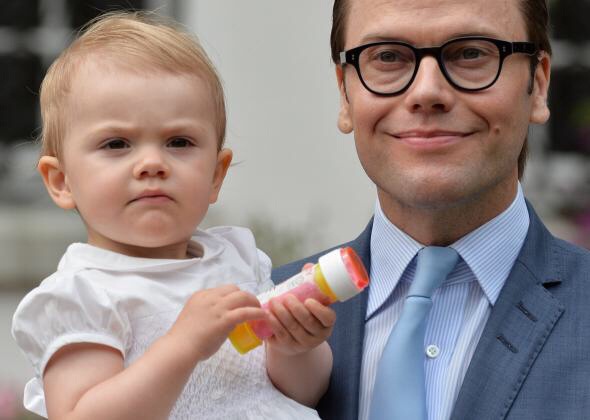 The Swedish Prince, Daniel, presumably collecting $137/day plus top-up.
 The Spigelblog
well, that does it. These late bloomers are finally going to have to make our move – to Sweden, and to get started on having a family. Better late than never, eh.